

Mikov Kitchen Knives


Mikov Kitchen Knives: From Paring Knife to Chef's Knife
Mikov makes its kitchen knives in Mikulášovice, Czech Republic. The manufacturer designs them both for everyday home cooking and for restaurant kitchens. This section offers 25+ models: task-specific knives, all-round utility knives and a few specialist tools, such as the APPET tasting knife and the HANDY folding waiter's knife.
Two series: RUBY and CLASSIC
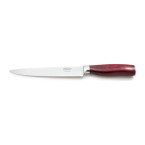
The RUBY series is the premium line for people who cook a lot and enjoy it. The knives have wooden handles and carefully tuned balance. The handle meets the blade with no seam, so there is no gap for dirt to collect. The series is designed as a matching set: chef's knife, santoku, bread, slicing, vegetable, fruit, steak and paring knives.
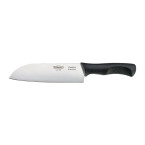
The CLASSIC series is a traditional, practical everyday line. Most models have plastic handles that are easy to clean and don't mind moisture. CLASSIC suits homes, holiday cottages and cafés where knives get heavy use. The series includes a chef's knife, santoku, serrated bread knife, utility knives in wide and narrow versions, and vegetable, paring, cheese and boning knives.
The LUX 321-ND-18 stands on its own: an 18 cm utility knife with a wooden handle for anyone who wants one dependable knife for most jobs.
Which knife for which job
- Chef's knife — the kitchen workhorse. Its broad, long blade handles vegetables, herbs and meat.
- Santoku — a Japanese shape with a shorter, flatter blade. It is ideal for straight up-and-down chopping.
- Bread knife — has a serrated edge that cuts through a hard crust without squashing the soft crumb.
- Utility knife — a mid-length blade for cheese, sausage, tomatoes and small jobs where a chef's knife is too big.
- Vegetable, fruit and paring knives — short and nimble, for in-hand work such as peeling potatoes or coring apples.
- Boning and slicing knives — for taking meat off the bone or carving a roast. For regular work on large cuts, Mikov butcher knives are the better choice.
Where to start: a basic set
Mikov recommends starting with three knives rather than many: a large chef's knife, a mid-size utility knife and a small paring knife. That covers most everyday cooking. Then add knives to suit your habits: a bread knife if you often buy whole loaves, or a santoku if you prefer chopping to rocking the blade. If you'd rather get everything at once, take a look at Mikov knife sets.
Chef's knife or santoku?
Both knives do the same jobs; the difference is technique. A chef's knife has a noticeably curved edge towards the tip, so you can rock it without lifting the tip off the board. A santoku has a flatter edge and a wide blade. You cut with a short down-and-forward stroke, and the wide blade lets you scoop food off the board. If you're unsure, start with a chef's knife, as it is more versatile.
Keeping the edge sharp
- Hone the edge regularly with a sharpening steel. It straightens the edge without removing metal.
- Cut on wooden or plastic boards. Glass, stone and ceramic dull a blade quickly.
- Wash knives by hand and dry them straight away, especially RUBY knives with wooden handles.
- Store knives in a block or on a magnetic strip rather than loose in a drawer.
Why buy from us
PROFI-INSTRUMENT is the official Mikov distributor in Ukraine, as confirmed by our dealer certificate. You get genuine Czech-made knives and advice on choosing the right ones. Some models are in stock; others we bring in to order. Tell us what and how often you cook, and we'll help you build a set without unnecessary knives.
FAQ
What's the difference between RUBY and CLASSIC?
RUBY is the premium series, with wooden handles, carefully tuned balance and a seamless handle-to-blade joint. CLASSIC is a practical line, mostly with plastic handles, built for intensive everyday use.
Which knife should I buy first?
A chef's knife, because it handles the widest range of tasks. Then add a utility knife and a paring knife.
Can Mikov kitchen knives go in the dishwasher?
We don't recommend it. Hot water and harsh detergents dull the edge and damage handles, especially wooden ones. Wash by hand and dry straight away.


