

Mikov Kitchen and Butcher Knives


Mikov Knives for the Kitchen and Meat Processing
Mikov makes its knives in Mikulášovice, a Czech town with a long cutlery-making tradition. The brand's kitchen and butcher lines cover two different jobs. The first is everyday cooking at home. The second is serious meat work in restaurants, meat plants and on farms. This section brings together 50+ items: individual knives, honing steels and ready-made sets.
What you'll find here
- Kitchen knives: a chef's knife, santoku, serrated bread knife, paring and utility knives. The section also includes the APPET tasting knife and the HANDY folding waiter's knife.
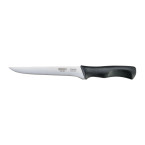
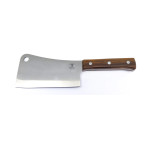
- Butcher knives: straight and curved boning knives, slicing/portioning knives, piercing knives and a meat cleaver. They come in two series, CLASSIC and LUX PROFI.
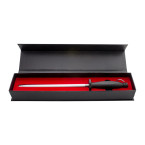
- Sharpening steels to keep the edge between sharpenings.
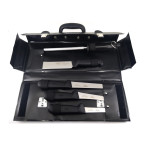
- Knife sets, including butcher sets supplied in a sheath or case.
Kitchen or butcher knife: how to choose
For a home kitchen, Mikov suggests starting with three knives. The first is a large chef's knife with a broad blade, which handles most tasks, from onions to meat. The second is a mid-size utility knife. The third is a small paring knife for fruit and vegetables. Everything else, such as a bread knife or santoku, is worth adding as your cooking habits require.
Butcher knives are narrower and more specialised. A boning knife has a short, slim blade so you can cut close along the bone. A slicing knife is the opposite: long and straight, for an even slice in one smooth stroke. A cleaver is for chopping, not fine work. If you process meat regularly, a complete set is usually more convenient than buying knives one by one.
CLASSIC, LUX PROFI and LUX series
CLASSIC is the everyday workhorse series. Most models have plastic handles that are easy to clean and don't mind moisture. That is why these knives are typically chosen for food production, where hygiene comes first. LUX PROFI keeps the same professional blade shapes as the CLASSIC butcher knives but adds rosewood handle scales. It suits users who value the feel and look of natural wood. The kitchen range also includes the LUX 321-ND-18, a utility knife with a wooden handle.
Making your knife last
The manufacturer's care advice is simple, but it has the biggest effect on how long a knife stays sharp.
- Before each session, draw the blade along a honing steel on both sides. The steel doesn't remove metal; it realigns the edge, so sharpness returns in a few strokes.
- Cut on wooden or plastic boards. Glass, marble and ceramic dull an edge very quickly.
- Wash knives by hand and dry them straight away. Dishwashers damage both the edge and the handle, especially wooden ones.
- Store knives in a block or on a magnetic strip rather than loose in a drawer.
Why buy from us
PROFI-INSTRUMENT is the official Mikov distributor in Ukraine, as confirmed by our dealer certificate. You get genuine Czech-made products and advice from people who know the range. Some models are in stock; others we bring in to order. If you're unsure about blade length or shape, tell us what you need to cut and we'll help you choose.
FAQ
Can Mikov knives go in the dishwasher?
We don't recommend it. Hot water, long cycles and harsh detergents dull the edge and damage handles. Rinsing under running water and wiping dry is enough.
What's the difference between a boning knife and a slicing knife?
A boning knife has a short, narrow blade for working around bones and joints. A slicing knife is long and straight, made for clean cuts through large pieces of meat.
Why use a honing steel if the knife is already sharp?
With use, the edge gradually rolls over, so the knife feels dull even though there is plenty of metal left. A honing steel straightens the edge and delays the need for full sharpening.


