

Mikov Honing Steels

Mikov Honing Steels: A Sharp Knife Every Day Without Sharpening
Even the best blade eventually starts to drag through food instead of cutting it. Most of the time the knife isn't actually dull: its thin edge has simply rolled to one side during use. Cooks and butchers straighten it with a honing steel. Czech manufacturer Mikov calls the honing steel an essential companion to your knives in both professional and home kitchens. Regular honing restores cutting performance and extends the life of the blade.
A honing steel is not a sharpener
A sharpener or whetstone removes metal to create a new edge. A honing steel works differently: it removes almost no metal and simply realigns the rolled edge. That means you can hone every day without wearing the blade down. Full sharpening is only needed once honing no longer helps, and with regular honing that happens far less often.
Mikov models
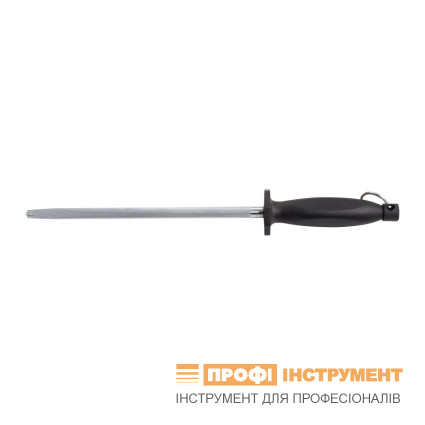
- CLASSIC 896-OCR-25 — a 25 cm round honing steel. A versatile option for any kitchen or butcher knife, and easy to learn on.
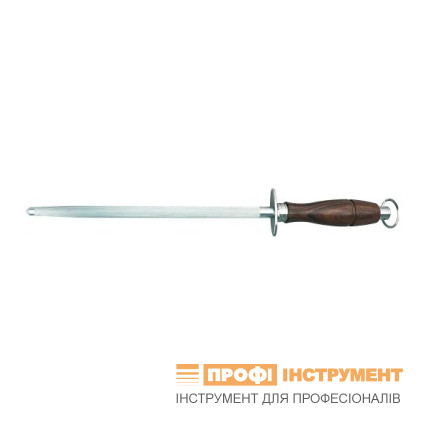
- RUBY 898-OD-25 — a 25 cm oval honing steel with a wooden handle. Styled to match the premium kitchen series, it's the natural partner for RUBY knives.
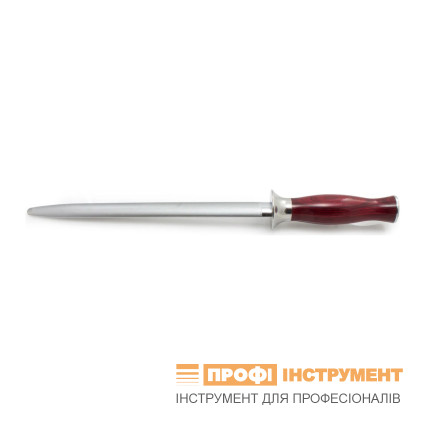
- LUX PROFI 899-OD-25 — a 25 cm honing steel with a rosewood handle, the companion to LUX PROFI butcher knives for those who work with meat regularly.
According to the manufacturer, the ergonomic handles give a comfortable, secure grip, while the quality material of the honing surface delivers precise results.
Round or oval?
A round steel touches the edge at a narrow point. It is versatile, easy to learn and suits blades of any width. An oval steel has a larger contact area, so it realigns the edge in fewer passes. It works especially well with wide chef's knife blades and long portioning knives.
How to hone a knife
- Hold the steel vertically with its tip resting on a board or towel. This is the safest method, especially for beginners.
- Place the heel of the blade against the top of the steel at an angle of roughly 15–20°.
- With light pressure, draw the blade down and towards you so the whole edge passes over the steel from heel to tip.
- Repeat on the other side, alternating sides. Usually 5–6 passes per side are enough.
- Don't press hard: honing is a light touch, not sharpening. Wipe the blade afterwards to remove fine metal particles.
How often to hone
At home, a few passes before cooking, or whenever the knife starts to cut less cleanly, is enough. In butchery the edge rolls quickly, so knives are honed several times per shift. Serrated knives, such as bread knives, are not honed with a steel.
Match a steel to your knives
Mikov honing steels work with all Mikov kitchen knives and butcher knives, as well as any other plain-edged knives. If you're buying knives from scratch, look at our knife sets, as some already include a honing steel.
Caring for your honing steel
- Wipe the honing surface with a dry cloth after use.
- Don't leave the steel soaking, especially models with wooden handles.
- Store it separately or in a knife block so the honing surface doesn't knock against other tools.
Official supply
PROFI-INSTRUMENT is the official Mikov distributor in Ukraine, as confirmed by our dealer certificate. We supply honing steels to order, directly from the manufacturer. Ask our manager about lead times, and we'll help you choose the right model for your knives.
FAQ
Does a honing steel replace sharpening?
No, but it postpones it for a long time. Honing realigns the edge; sharpening creates a new one. If the knife won't cut even after honing, it's time to sharpen it.
Can I use a Mikov steel on other brands' knives?
Yes, on any plain-edged knife. Honing steels aren't used on serrated or scalloped edges.
How many passes should I make?
Usually 5–6 light, alternating passes per side. There's no need to press hard: a consistent angle matters more than force.


